
Samsung Survey Frames Bigger Screens and Privacy as Mobile-Computing Pain Points
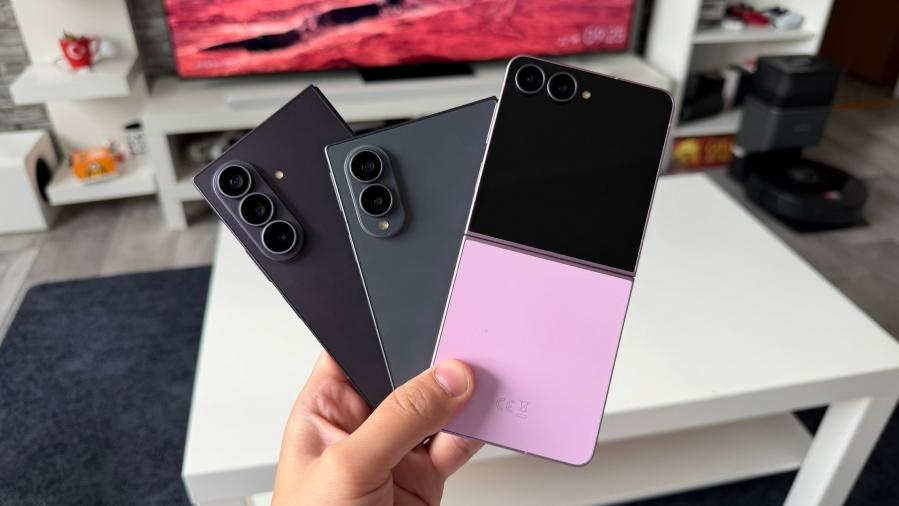
For people trying to use a phone as a primary mobile-computing device, the limitations are often mundane rather than aspirational. In a Samsung survey, 36% of respondents identified having to charge too often as one of their leading frustrations. The same research points to screen space, multitasking friction, and concern about onlookers seeing sensitive information as barriers to doing more from a phone.
The survey found that 66% of participants chose their current phone with at least one interest they hoped to pursue in mind, including gaming, travel, content creation, or personal projects. Another 28% said it mattered that the device reflected their personal style. But daily use does not always match those ambitions.
- 18% said repeatedly switching among apps to complete a task is frustrating.
- 14% said they do not always have enough screen space.
- 13% said they have had to move an activity started on a phone to a larger device.
- 27% said they had stopped or avoided banking in public because someone nearby could see their screen.
Foldables positioned as an answer to multitasking limits
Samsung uses those results to make the case for a broader mix of phone form factors. The company links privacy to its Privacy Display feature, larger-screen productivity to its Fold line, personal expression to the Flip line, and entertainment to a foldable display. For tablet and portable-computing users, the relevant pitch is clear: a larger flexible screen could reduce the need to hand off tasks to a separate device.
That is why we developed not one, but three types of foldable smartphones, alongside devices in a classic format.
Benjamin Braun, marketing director, Samsung Europe
Samsung’s survey specifically associates several products with those use cases:
- Galaxy S26 Ultra: Privacy Display for reducing visibility from side angles.
- Galaxy Z Fold8 Ultra: multitasking across multiple apps on a larger foldable screen.
- Galaxy Z Flip8: a foldable positioned around personal style.
- Galaxy Z Fold8: a foldable positioned for entertainment.
There is a trade-off to privacy-screen technology. The assessment described in the report found that enabling Privacy Display on the Galaxy S26 Ultra reduces brightness and makes the image appear softer. That may be worthwhile for users who regularly handle financial or other sensitive information in public, but it is a display compromise worth checking before buying. Samsung said 18% of respondents could consider another type of phone for better protection from nearby viewers.
After basic needs are met, 22% of respondents said speed and performance would be their top priority for a future upgrade. Another 20% wanted to do more directly on a phone without moving to a larger-screen device, while 15% prioritized a thinner, more portable design. The findings suggest that foldables remain a proposition for users who value extra workspace but do not want to carry a tablet separately; U.S. availability and pricing for the models cited were not confirmed in the survey material.
Censuswide conducted the research from September 25 through September 30 among 5,001 adults in France, Germany, Italy, Spain, and the United Kingdom. The results describe those five markets and should not be treated as a survey of U.S. consumers.
Post Footer automatically generated by Add Post Footer Plugin for wordpress.
Comments are closed.