
Neutral host wireless – enterprises pick up the bill as the business case shifts
Mobile operators are increasingly leaving enterprises to foot the bill for indoor connectivity. Neutral host suppliers are responding with more flexible infrastructure – combining public cellular, private 5G, and IoT – to make deployments pay.
In sum – what to know:
Funding models – Mobile operators are stepping back from funding indoor connectivity, shifting deployment costs towards building owners and enterprises.
Scaling challenge – Repeatable DAS designs and off-air systems could make neutral-host deployments cheaper and easier to scale across enterprise estates.
Additional value – Suppliers want to extend the value of shared infrastructure into private 5G, IoT and other services, while maintaining carrier-grade performance.
The economics of neutral host wireless are changing. Mobile operators are increasingly reluctant to fund indoor connectivity infrastructure themselves, shifting the cost of deployment towards building owners and enterprises. The challenge for the industry is to make that investment worthwhile – by extending the value of the underlying infrastructure beyond conventional cellular coverage and into private 5G, IoT, and other enterprise services.
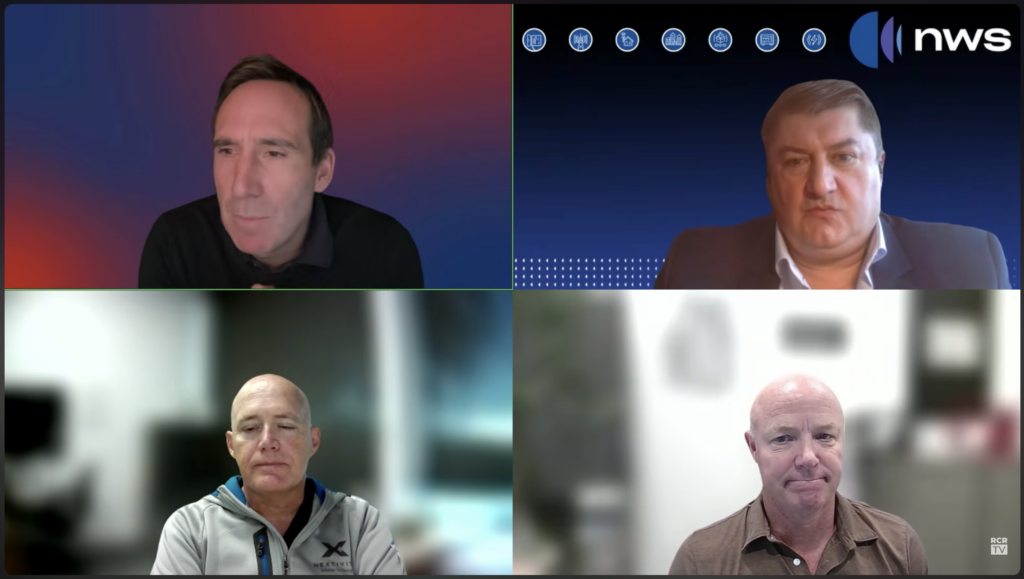
This was a recurring theme during a panel session at Industrial Wireless Forum earlier this month, where a quorum of North American vendor specialists – Nextivity, NWS Next, LINX Wireless – discussed the development, design, and deployment of neutral host solutions, and described a market moving away from bespoke carrier-funded distributed antenna system (DAS) projects towards more flexible enterprise-led connectivity models.
There were five takeaways, at least; the full session is available online.
1 | Carriers are stepping back, enterprises are stepping up
The most immediate change is commercial, the panel said. Where US operators once played a significant role in funding and deploying neutral host infrastructure, the responsibility is increasingly falling to building owners. “It is now almost exclusively up to the end user to pay for the system,” said Chad Ballard at systems integrator LINX Wireless, deploying neutral-host and private 5G in the US and Canada – including for Nextivity, also on the panel.
“Unless you are in a stadium or a mass transit facility – where there are tens of thousands of people,” he added. Carriers might contribute signal sources, but the business case is more-often up to the enterprise – along with the gnarly tasks of design, deployment, and operation. Which can be a rude surprise for enterprises, expecting operators to cough-up the funds to light-up their airwaves – and a challenge for integrators to “manage their expectations”.
“Because they’ve heard, you know, [the way it’s worked] in the past,” said Ballard. “[They] think carriers will pay for [it]. And if they’re not budgeting properly or [not] getting good advice from partners, then it’s a bit of a shock when the carriers say ‘no’.” It is the same in Canada, said Besnik Bashi, director of engineering services at NWS. “We see more and more operators holding on to their spectrum, rather than providing solutions for every venue,” he said.
Operators have a vested interest, clearly, to run on the right system. Enterprises are paying for systems that bear their service and brand. “The end user sees their logo… on their phone. [So] operators want the experience to be as good as possible. But the overall cost of the DAS is shifting to the building owner,” said Bashi. Which is a message, of course, for both sides to pick the right suppliers – to rationalize the investment, and optimize the service.
2 | The business case is more than a coverage proposition
With enterprises being asked to fund their own cellular coverage, the business case has to work harder. As possible, the system should provide more than just an indoor extension to public mobile networks, suggested California-based neutral-host and private-networks hardware vendor Nextivity. “For the most part, we absolutely see cellular as the anchor tenant… [which] really drives initial discussions,” said Michiel Lotter, chief executive at the firm.
“[But] more and more, public safety drives it as well. So you can come at it from both angles: cellular, as well as public safety. And once it is in place, we can distribute signals across a multitude of applications… You start with cellular as the baseline, and, depending on the needs of the customer, grow for a very small incremental cost to [cover] IoT and private 5G as well,” he said. Nextivity’s DAS solutions are based on its own chipset, he noted.
The chipset makes the DAS more than just a passive distribution system, suggested Lotter – so integrators like LINX and NWS can build intelligence into its in-building and repeater products, creating a platform that can be extended beyond conventional cellular coverage. “The chip allows us to put a ton of intelligence into a DAS and into a repeater, and [our] sort-of claim-to-fame is [we can] create an [edge connectivity] platform for the enterprise.”
Which verticals are rolling private 5G for critical comms onto neutral-host DAS set-ups? Healthcare is one, suggested Lotter – particularly where back-office efficiencies provide a clearer business case. “Healthcare is a great market for private 5G,” he said. What about retail, say – going from general-purpose to priority-lane comms? “It’s more end-customer focused,” he said – essentially geared for neutral-host, plus IoT to “enrich the experience”.
3 | The route to scale is repeatable enterprise deployment
There is also a distinction between large-scale neutral host projects – at entertainment venues, transport hubs, logistics facilities – and the opportunity to deploy systems repeatedly across scattered enterprise estates. The panel discussed both. NWS has a good case study at Princess Auto Stadium in Winnipeg – as an example of a shared neutral-host infrastructure project for high-capacity public cellular, with scope for private 5G and other services.
NWS worked with Canadian operators to replace an ageing DAS at the venue with its own digital active neutral-host DAS platform, supporting up to 30 ‘sectors’ and around 25 Gbps of aggregate capacity – not just to improve coverage and capacity, but to ensure the network could ‘dominate’ interference from outdoor macro sites. It allows spectrum to be allocated for private 5G, as required – and for IoT and AI, and whatever else.
Bashi cited its performance during an outdoor hockey game, which brought an unusually large crowd, with heavy mobile use both at the entrances for e-tickets and throughout the match. But the chance to multiply smaller enterprise-funded “cookie cutter” DAS projects across multiple sites is just as interesting, suggested Lotter. “You have these… big complex deals like Besnik is describing, which [take] a ton of [planning and negotiation],” he said.
“But [you have] this mass market… [where] a large enterprise has 1,000 warehouses [and] two or three layouts, and each needs the same services because they have the same procedures. So a [repeatable] system and layout, and a partner that knows the enterprise, [is] a key part to that mass deployment.” The ability to reuse shared infrastructure for private 5G is part of the deal, as well – and can be added to the DAS set-up on CBRS in the US.
The FCC is “working on new rules and structures” around CBRS over DAS, he said. The signal source will depend on the site, he added; off-air systems – which capture an outdoor signal and bring it indoors – offer quick and cheap options for mass-market deployments, but are less appropriate for large or complex projects. Connecting a CBRS radio to the DAS offers another route, so private-5G signals share the same in-building distribution infrastructure.
The ambition, said Lotter, is to make private 5G straightforward to add on top. “Once you’ve got the DAS in the building, adding private 5G is like an hour’s work; you plug the signal in, and you’re pretty much there.” Which is the attraction of designing the infrastructure for reuse from the outset: the initial coverage investment provides a platform for future services. Plus, once the business case works, big businesses will tend to flick the switch on whole estates.
“We don’t see large enterprises deploying private 5G in a single place. They adopt it enterprise-wide. The business case must make sense. [So] you need a really efficient way to deliver that service enterprise-wide. Which is where reuse of the DAS infrastructure becomes really important.” The implication is that standardized infrastructure and integration, plus deep channel partnerships, matter as much as the underlying radio technology.
4 | Off-air offers a shortcut to indoor connectivity
The choice of signal source is central to making these deployments economical. Dedicated operator feeds and private-network radios offer greater control, but they can also introduce cost, complexity, and delays. Off-air systems provide a simpler alternative: capture the cellular signals already outside a building and distribute them indoors. For Lotter, the biggest advantages are speed and control over deployment schedules.
Securing a dedicated signal source can be a difficult part of a project, he said, whereas off-air is immediately available. “The biggest advantage between off-air is time to deployment and being able to control the timeline to deploy… Sometimes it’s really difficult to get the signal source and so forth… Off-air obviously is always available.” There is also an argument about making better use of infrastructure operators have already built.
Telcos invest heavily in their public networks, noted Lotter, so bringing their signals inside is the straightest way to address indoor coverage issues. “Nobody invests as much effort and time into the network as the operator. The best network with the best throughput, with the best features, is the one outside your walls. If the only thing that prevents that super-duper network from making it into your building is the wall, then the best way is to erase the wall.”
There are limits, naturally. Off-air is not a universal answer, particularly where capacity requirements are high or the external macro signal is insufficient. A stadium needs a more engineered solution, with dedicated capacity and sufficient control over interference – as the Princess Auto Stadium project illustrates. But for more conventional enterprise environments, off-air can provide a much quicker and cheaper route to indoor cellular coverage.
It also fits the repeatable deployment model discussed earlier: rather than engineering a bespoke signal source for every building, enterprises can use what’s already available and standardize the indoor distribution system around it.
The distinction is important. Off-air does not replace operator-fed DAS or private networks across the board. It provides a lower-cost entry point for buildings where the primary requirement is to bring coverage indoors, without the expense and lead times of more elaborate deployments.
5 | Future-proofing means more than next-gen radios
There is a longer-term design question, too. If enterprises are now paying for the infrastructure, they need to avoid investing in systems that become expensive to upgrade as spectrum requirements and network technologies evolve. The panel’s advice was to put more thought into the passive layer – particularly antenna density – so active equipment can be replaced or upgraded without rebuilding the distribution infrastructure.
Ballard argued that higher frequencies are likely to feature in future generations of mobile technology, making this a consideration for in-building design today. “As you anticipate, you know, whatever 6G is going to be. In general, our philosophy around that is that we will have higher frequencies. And from an engineering standpoint, what we would like to do is to have the passive layer be capable of supporting performance of those higher frequencies.”
His recommendation is to build sufficient antenna density from the outset, allowing operators and building owners to upgrade head-end equipment and support additional spectrum without having to rip and replace the underlying system. “So you’re capable of upgrading your head-ends and covering your… spectrum, with the appropriate equipment to upgrade as that technology becomes available without needing a rip-and-eplace,” he explained.
Interoperability and spectrum flexibility also matter.
The panel was broadly positive about different models and architectures – MOCN and MORAN; open RAN also – to sharing networks, spectrum, equipment. But there are constraints. Lotter cautioned against overestimating the capacity available through CBRS in the US: its shared spectrum system can help make private 5G deployments more economical, as discussed above, but does not necessarily offer the same resources as the major operators’ macro networks.
More enterprise deployments could also put additional pressure on available CBRS capacity. And there is another important qualification to the idea that enterprises are taking control of their indoor infrastructure. They might be paying for the system, but operators still have a say. They remain closely involved in approving the equipment and platforms used in indoor deployments, and in setting expectations for network performance, noted Bashi.
“Even though the building owner is the one paying for it, there are some rules and regulations they like to enforce [around] what products are used for these in-building DAS systems, what performance they will provide, and how they are maintained in the long run.” NWS works with operators to have equipment tested and approved, said Bashi, allowing enterprises to adopt more cost-effective systems without compromising the carrier-grade service standards.
It is a reminder that neutral host projects remain a collaborative proposition: the enterprise may own the infrastructure, but the operators have to be comfortable running their services over it.
Comments are closed.